Some arrivals feel less like meetings and more like
the rain recognising the earth it has always belonged to —
quiet, certain, without needing to announce itself.
In the quiet hours, when the rain creates a private world, certain words feel like they were written for a memory that hasn't happened yet.
তুমি রবে নীরবে হৃদয়ে মম,
নিবিড় নিভৃত পূর্ণিমা-নিশীথিনী-সম —
মম জীবন যৌবন
মম অখিল ভুবন।
You shall remain, silent, in my heart —
like the deep, secret radiance of a full-moon night.
My life, my youth, my whole world entire.
— রবীন্দ্রনাথ ঠাকুর

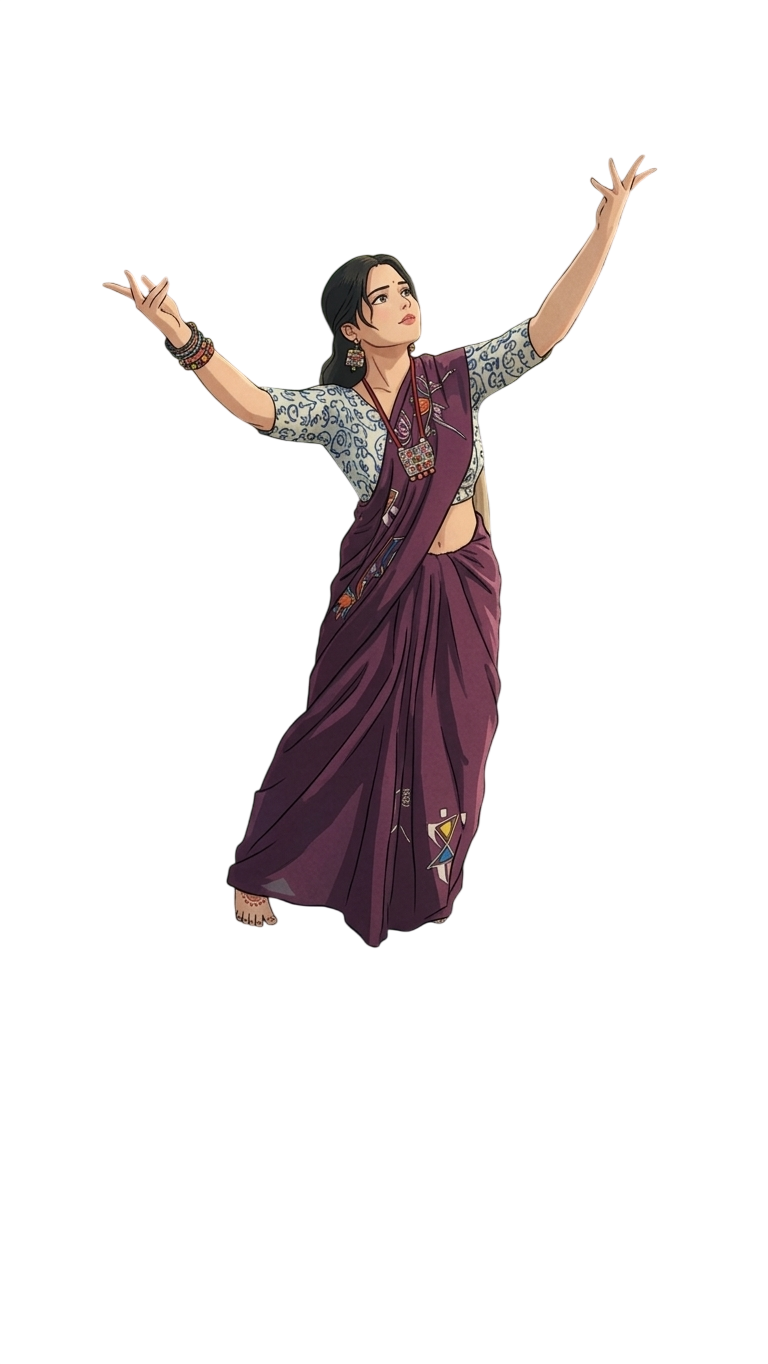
The diary opens on its own at certain hours. Turn the pages — Tagore's ink is still wet on some. A red-bordered saree turns in the lantern light, and the esraj forgets how to stop.
Put the needle down. The night is older than the song, and the song is older than the singer. Outside, a woman closes a wet window — but only halfway. She wants the rain to keep listening.
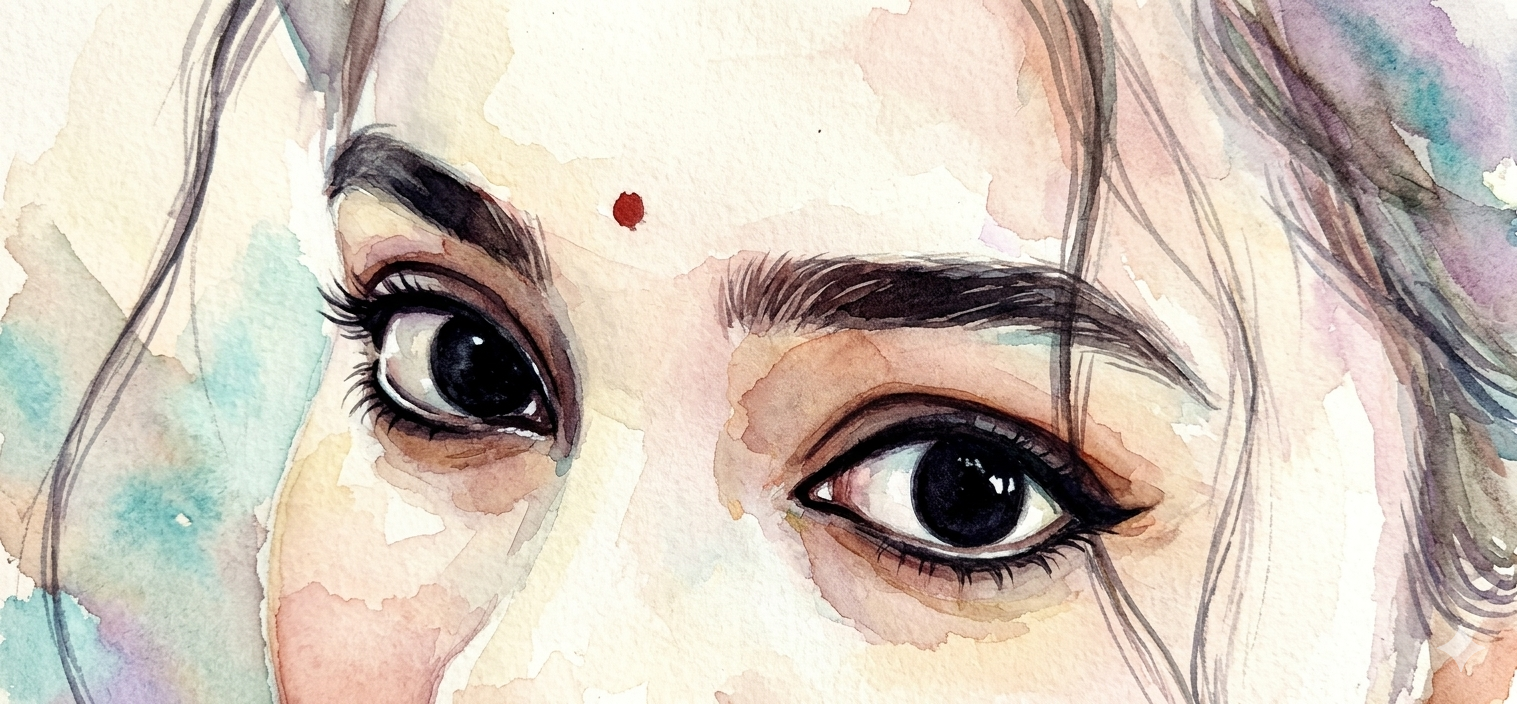
A close-up. Not a portrait. Just the way certain Bengali eyes carry the whole monsoon behind them — kajol, a lal tip, and a silence that no song has been able to translate.
এক জোড়া শান্ত চোখের গহীনে যেন এই মেঘলা কলকাতা থমকে থাকে। In a pair of eyes — the whole monsoon of Calcutta.
লাল টিপের আড়ালে শান্ত হয়ে থাকে কত না-বলা সহজ গল্প। Behind the red bindi — an unfinished poem remains hidden.
রাতের এই নিস্তব্ধতার মাঝেও যেন রবীন্দ্রসঙ্গীতের এক অদ্ভুত স্নিগ্ধ সুর। Even in the silence — a haunting note of Rabindra Sangeet.
সেই কাজলের গাঢ় ছায়ায় এমন কিছু নীরবতা থাকে—
যা বোঝাতে কোনো ভাষার প্রয়োজন হয় না।
In the deep shadow of kajol, stories are told— that defy the limits of words.
The radio crackles awake at 11 p.m. A torchlight cuts the fog. Somewhere, Feluda lights a Charminar and asks the question no one wanted to answer.
The fog had not lifted since dusk. From the second-floor balcony of a sleeping house on Beadon Street, someone had been watching the lane for three hours — patient as a cat at a bowl of milk.
The clock at Hatibagan struck twelve. The first tram of the new day groaned awake at the depot, and a yellow taxi turned the corner with its headlights off. This, the detective murmured, is the bit they always get wrong.
— continued in case file —
A retired professor, a stolen manuscript, and a fountain pen that writes only at midnight.
The river kept the secret for forty years. The bridge began to whisper only last Tuesday.
There is a fourth person in the photograph. The photographer says she only saw three.
A magnifying glass, a half-finished Charminar, and a tram-ticket bearing a date that never happened. Solve the riddle. The city has been holding its breath for forty-seven years.
Three known facts, one unknown name. Move your magnifier across the scroll. The ink that hides has its own way of being read.
The accused — if one may even use that word — left no fingerprint, no shadow, no debt at the paanwallah on the corner. Only a half-page, ripped from a Tagore songbook, found beneath the second-floor balcony of the same address that appears in three separate Sealdah newspaper clippings spanning 1948, 1971, and the present rainy season.
And yet, there is a single inked word — "Abhipsa" — written on the inside of the cover, in the same hand that signed nothing else. The ink, when examined under heat, glows the colour of marigold.
I have, in three decades of work, learned to mistrust coincidence and to trust handwriting. The two have rarely agreed — until this case.
— P.C. Mitter, retired
যদি কোনোদিন খুব একা লাগে — তাহলে কোনো এক বর্ষার সন্ধ্যায় এসে গল্প কোরো।
If one day the alone-ness feels too wide — come, on some monsoon evening, and let us simply talk.
বন্ধুত্ব কখনো কখনো রবীন্দ্রসঙ্গীতের মতো — ধীরে ধীরে হৃদয়ে থেকে যায়।
Friendship is sometimes like a Rabindra Sangeet — it stays in the heart slowly, without announcement.
তোমাকে পাওয়ার কথা ভাবিনি — শুধু মনে হয়েছে, তুমি থাকলে কিছু সন্ধ্যা আরও সুন্দর হতো।
I did not think of having you. Only — it felt like some evenings would have been a little more beautiful with you in them.
যদি কখনো ইচ্ছে হয় — পুরোনো কলকাতার বৃষ্টির ভিতর একটু হাঁটা যেতে পারে।
সব গল্প প্রেম হয় না। কিছু গল্প শুধু খুব সুন্দর হয়।
If you ever feel like it — we could walk a little through the rain of old Calcutta.
Not all stories become love. Some stories simply become beautiful.
—ভাস্কর
"Perhaps some people arrive not to change life —
but to make it feel a little more poetic."
মেঘেদের এই ডায়েরিতে আজও জমা থাকে এক গভীর অভীপ্সা—
ঠিক যেভাবে কাশবনের চাদরে লুকিয়ে থাকে ভাই-বোনের লুকোচুরি আর এক চিলতে মিষ্টি অনুভব।
"দেখ্ রে দিদি, দেখ্ — আসছে রে!" — Look, sister — look. It's coming.
Move the wind through the kash —
run your cursor across the field.
—
interactive moment —
Daarjeeling at five in the morning. The sun does not so much rise as remember itself. The first sip of tea is sharper than the cold — and the silence is the kind only mountains know how to keep.
"পাহাড়ের চূড়ায় দাঁড়িয়ে মনে হয়, এই মেঘেদের দেশে কোনো এক নামহীন সুর লুকিয়ে আছে, যার শেষটা হয়তো কোনো এক বসন্তের
অভীপ্সায়—
—
standing on the summit, the world feels like an ancient poem.
Tram-lines hold their breath. A balcony lamp flickers awake on the third floor. Somewhere a rosogolla cools in a clay pot, and Coffee House refuses to grow up.
Where ideas refuse to leave the table — even after the third cold cup at midnight.
The city's iron spine, holding up two banks of memory across the Hooghly. At dusk, every cable hums a different note.
The slowest journey in the city, and somehow the only honest one.
Wrought-iron balconies and lime-washed walls that remember more than the people inside them.
Where clay learns to be a goddess between July rains and the smell of straw.
Wet rails. Two warm windows. A bell that sounds like an apology. Watch the third window from the left — sometimes a name appears on the fog. Sometimes it doesn't. Both are honest.
Some afternoons are not meant to be filled. They are meant to be sat through — on a North Calcutta balcony with one warm tea, one fogged window, and the quiet certainty that the rain will pass, and you will not be in a hurry to move.
কিছু ব্যাকুলতা ঝড়ের শেষে সবচেয়ে স্পষ্ট হয়ে ওঠে—
ভারী বর্ষণ হয়ে নয়, বরং প্রথম আলোর রশ্মি হয়ে যা আলতো করে একটা নাম ফিসফিসিয়ে ডাকে।
Some longings are remembered most clearly in the rain —
not as a heavy downpour, but as a gentle prayer that the clouds might finally part.
The world is ready to be bright again.
বৃষ্টির পরে আকাশ যেমন হালকা হয়,
তেমনি কিছু কথা না বললেও মন হালকা হয়।
The way the sky lightens after rain — some things lighten the heart without being said.
মেঘ কেটে গেলেই প্রথম রোদ —
সেই রোদের নাম যেন অভীপ্সা।
When clouds part, the first light — as if that light had always been named something soft.
বর্ষা বিদায় নেয়, কিন্তু তার গন্ধ থেকে যায় —
মাটিতে, স্মৃতিতে, কোনো নামের ভাঁজে।
Monsoon departs, but its scent remains — in earth, in memory, in the fold of a name.
A wooden window left half-open. Rain breathing against the glass. Moonlight entering the room the way an old song enters a silence already waiting for it.
Tonight the rain sounds like someone turning pages very slowly.
“চাঁদের আলোতেও কখনো কখনো মেঘের ঘ্রাণ লেগে থাকে।”
এই মাঝরাতে ঘরটা যখন একদম শান্ত, জানলা দিয়ে আসা আলোটা কেমন যেন এক অদ্ভুত স্নিগ্ধতা ছড়িয়ে দেয়। নীলচে রাতের আলো আর হালকা বৃষ্টির শব্দ মিলেমিশে একটা খুব চেনা আরাম তৈরি করে আজকাল রাতের এই মৃদু আলোটার দিকে তাকালে কোনো নাম না নিয়েও মনে হয়—এই ব্যস্ত শহরের বুকেও এমন কিছু শান্ত সুন্দর মুহূর্ত থাকে, যা মনকে ভীষণ হালকা করে দেয়। জানলার কাচে যখন কুয়াশা জমে, তখন মনে হয় প্রতিটি বৃষ্টির ফোঁটাও যেন খুব যত্নে আগলে রাখার মতো কোনো একটা মিষ্টি গল্প মনে করার চেষ্টা করছে।
The rain is still close enough to hear, but soft enough to keep.
The dhaak begins at dawn on Mahashasthi and does not stop until the river takes her home. Press the drum — the city remembers the rhythm before you do.
Six days. One thousand thousand pandals. A river of conch shells, marigolds, sindoor, and shiuli petals — and a city that does not sleep until the last visarjan.
" বাজলো তোমার আলোর বেণু,
মাতলো রে ভুবন। "
A clay lamp on the verandah. A hand-fan moving slowly, slower, slowest. The smell of rice and rain. And somewhere — a lullaby older than the village itself.
"মায়ের কোলে ঘুমিয়ে পড়া বৃষ্টির শব্দ আজও বদলায়নি।"
Rain heard from a mother's lap never belongs to one season alone.
It carries rice-scent, hand-fan wind, fever-breaking touch, and the kind of tenderness cities can only imitate
from far away.
কিছু স্মৃতি আছে—যা মনখারাপের রাতে একলা ঘরের দরজায় এসে দাঁড়ায়। Some scents return childhood like a quiet, comforting knock on the door during a lonely night.
পরিবারের সেই চেনা উঠোন কখনো সত্যিই শেষ হয় না—সেখানে একটা ভরসার হাত সবটুকু একাকীত্ব মুছে দেয়। The warmth of a home does not end... it holds you close when the world feels too vast.
Every monsoon carries a little Abhipsa —
like rain on a clay roof remembering
a face it has never seen.
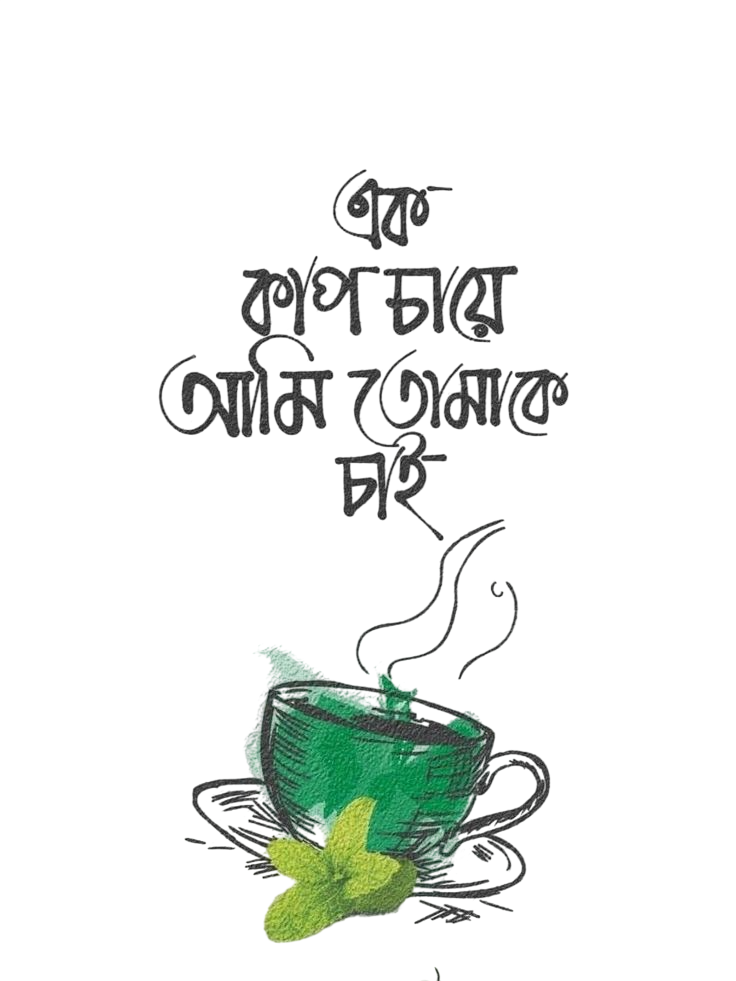
Two spoons of sugar. A teaspoon of conversation. And a window that looks out on the rain — for as long as it wants.
A charcoal wall in a North Calcutta studio. Drawings the artist never showed anyone, polaroids that took the photographer years to develop, and one envelope addressed to a name that has long since moved house — but the address still feels correct.
The artist signs nothing. Only the wall knows whose hand drew them. ক্যানভাসের সবকটা রঙ কিংবা কাঠকয়লার প্রতিটি টান... খুব নীরবে কেবল একটা চেনা মুখকেই খুঁজে বেড়ায়।
Seven locations. Seven small films. Tap a place to hear the city remember itself.
Where ideas refuse to leave the table. The cups have changed shape a dozen times, but the cold coffee at the bottom always tastes the same — like an argument you wish you hadn't won.